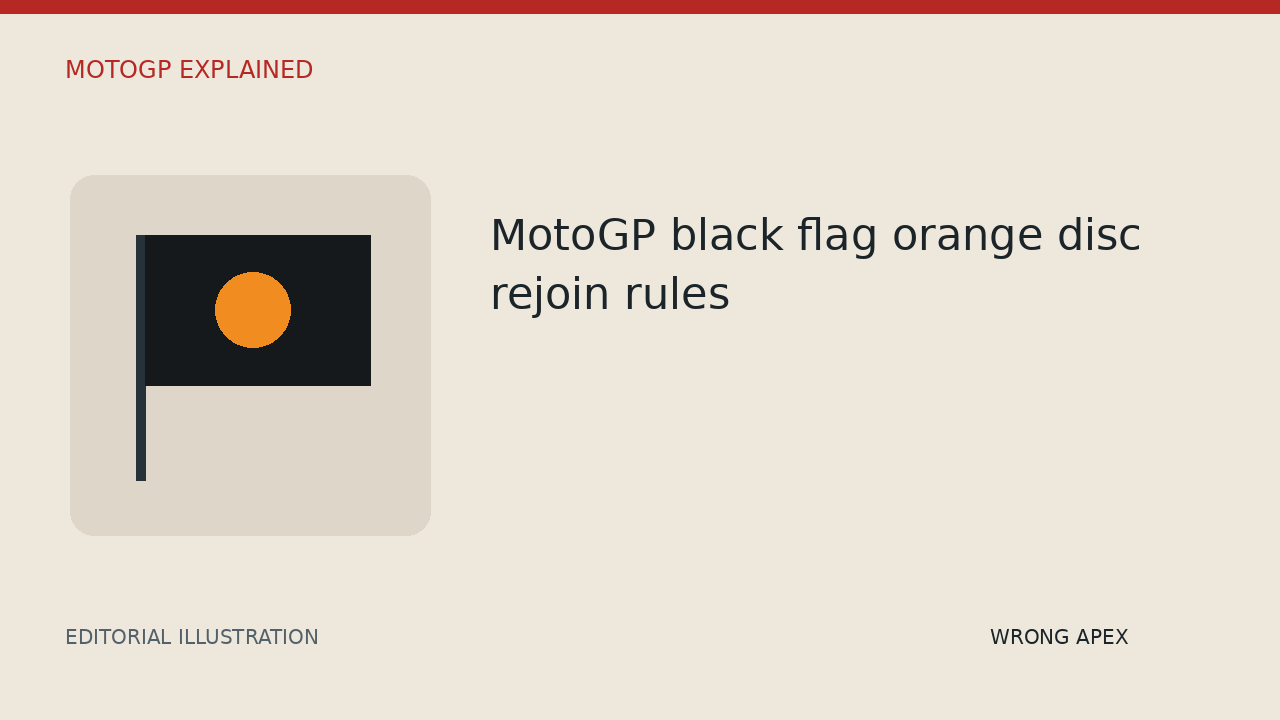
What the Flag Means for Track Safety
Track marshals and electronic light panels use a variety of signals to keep racing safe, but one of the most specific warnings is the black flag with an orange disc. Accompanied by a rider's number, this signal alerts a specific competitor that their machine has suffered a mechanical problem likely to endanger themselves or other riders on circuit. Rather than completing the lap, the affected rider must pull off and leave the racing surface immediately.
Steps Required Before Rejoining the Session
Unlike a disqualification, being shown this mechanical warning does not automatically end a competitor's session. However, simply fixing the mechanical failure in pit lane or in a runoff area is not enough on its own. Under official FIM regulations, riders must follow strict MotoGP black flag orange disc rejoin rules that require explicit authorisation from a race official before they are permitted to re-enter the circuit.
How It Differs From a Standard Black Flag
Beginner viewers often confuse the orange disc warning with a solid black flag, but the two command very different actions. A plain black flag issued for a driving or procedural penalty orders a rider to return to the pits at the end of their current lap, with no restart permitted. In contrast, the orange disc targets immediate mechanical danger and leaves open the possibility of racing again once authorized, provided the bike is deemed safe by officials.
Official reference: official MotoGP guide to flag meanings.

0 comments:
Post a Comment