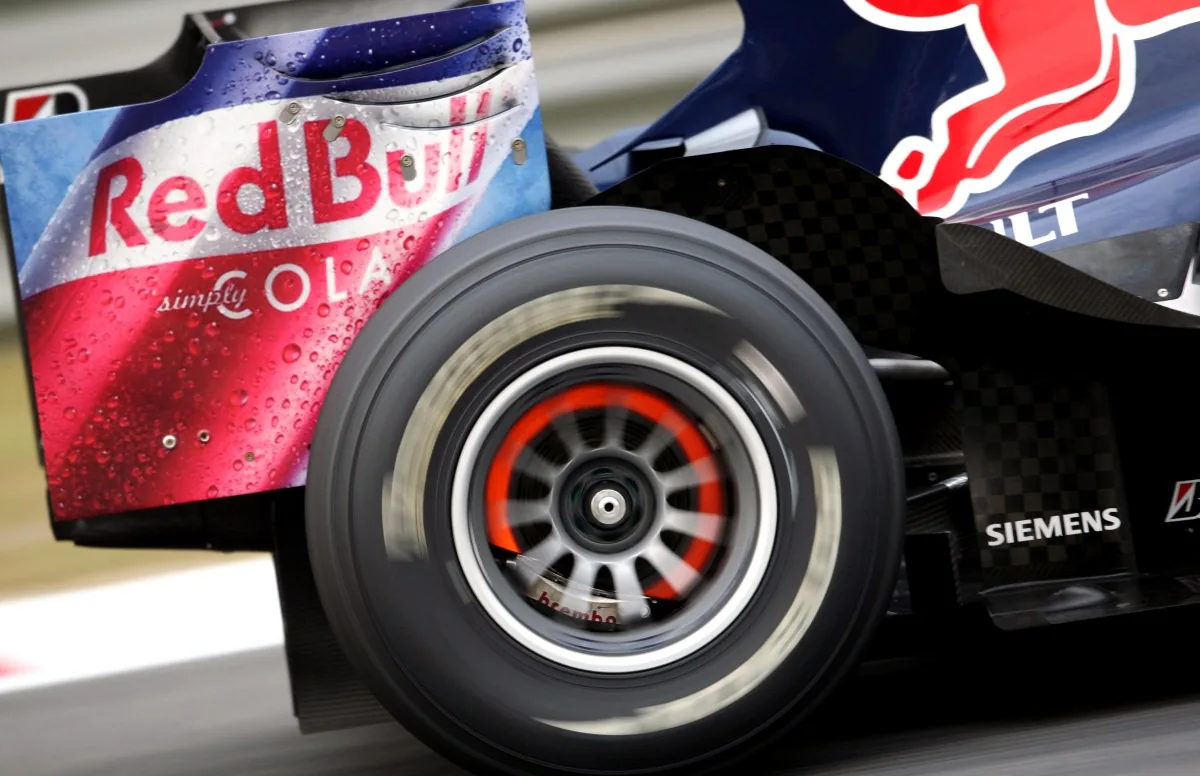
Friction and Light
During heavy deceleration, the friction created between the pads and discs generates intense thermal energy. Understanding Why F1 brake discs glow red comes down to this conversion of energy: the carbon-carbon material absorbs heat until it reaches temperatures high enough to emit visible light, an effect that is especially noticeable during night sessions or through heavy braking zones.
Operating Windows Versus Overheating
Seeing a rotor glow bright red does not indicate an immediate mechanical breakdown or a rule-triggering technical failure. Modern racing brakes are designed to operate within severe thermal environments, and carbon materials require considerable heat to function properly rather than performing at their best when cold. The glow itself represents normal light emission under load, provided the overall assembly stays within its safe thermal operating range.
True problems arise only when temperatures exceed the material limits or when ventilation fails to disperse the accumulated heat. When cooling holes cannot shed enough energy, extreme overheating accelerates the wear of both discs and pads and diminishes stopping performance.
Official reference: Formula 1 official news and results.

0 comments:
Post a Comment